
Nvidia CEO Issues Bold Tesla Call (From Brownstone Research)
At a Glance
- After China-based GPU manufacturer MetaX recently debuted on the Shanghai market, the stock gained 700%.
- With investors rotating out of U.S.-listed AI stocks, the news was reminiscent of January 2025’s DeepSeek market scare.
- But NVIDIA’s central role in the AI landscape and its strategic partnerships with companies like OpenAI nearly assures its long-term success.
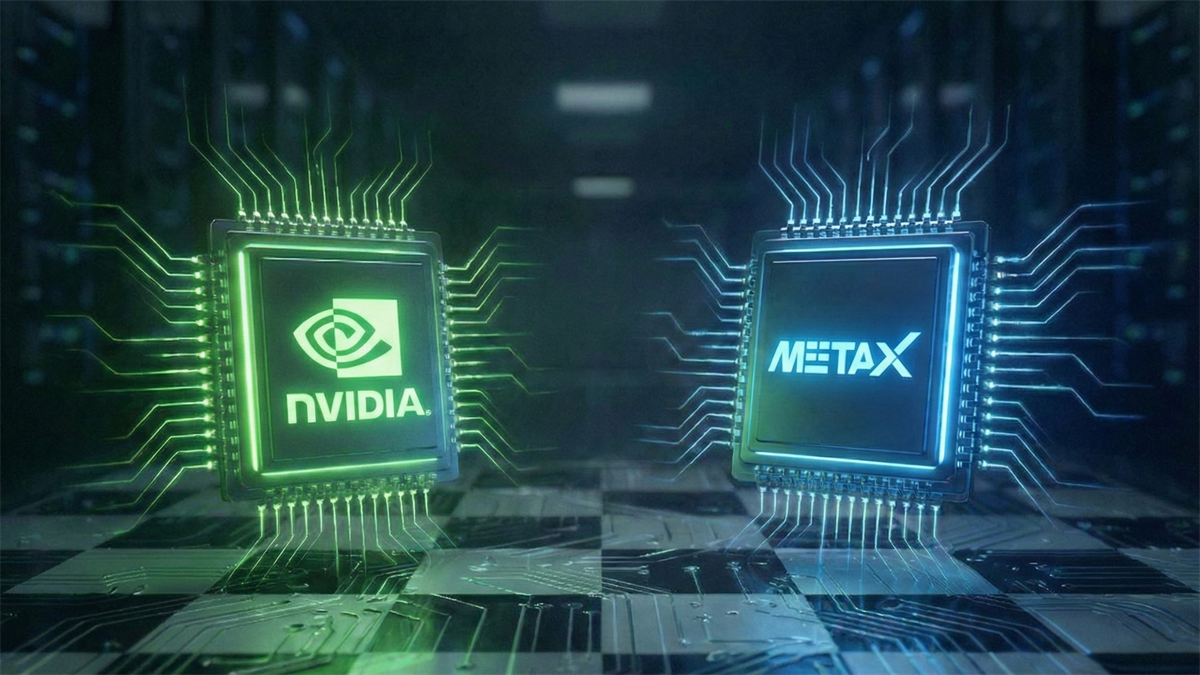
On Dec. 17, news broke about China-based MetaX Integrated Circuits making its public debut on the Shanghai Stock Exchange and subsequently surging by around 700%.
The company—not to be confused with Mark Zuckerberg-led Meta Platforms (NASDAQ: META)—was founded by former Advanced Micro Devices (NASDAQ: AMD) executives and develops general-purpose graphics processing units, or GPUs, for applications in artificial intelligence.
Because of the AI-focus of its microchips, the company has drawn comparisons to NVIDIA (NASDAQ: NVDA), the largest publicly traded company by market cap at $4.58 trillion.
As an increasing level of global competition comes to the forefront, should shareholders be concerned about threats to NVIDIA’s dominance?
A pre-IPO Play on the Starlink Hype for Under $100? (Ad)
Elon Musk’s Starlink project is generating major speculation ahead of a potential IPO that some analysts believe could reach a historic $100 billion valuation. According to James Altucher, there may be a smart “backdoor” way for everyday investors to position ahead of that event without needing traditional IPO access — and he says it can be done for under $100. He’s also sharing a free ticker tied to this trend for anyone who wants to take a closer look.
MetaX Is the Latest Example of a DeepSeek Market Scare
On Dec. 21, CNBC reported that AI-linked IPOs in China are undergoing rapid growth, with some of the listings “delivering eye-popping gains.” One week before MetaX made its debut, another GPU designer—Moore Threads Technology—also had its IPO, with its shares gaining approximately 400% thereafter.
At the same time, investors continued to rotate out of U.S.-listed tech stocks as concerns about elevated valuations, market concentration, and the specter of an AI bubble looms over the S&P 500.
The MetaX news accelerated selling of NVDA, which, after hitting its all-time high in late October 2025, had fallen by more than 17% by Dec. 17 before finding its footing.
For analysts and pundits, there was no shortage of correlations being drawn between MetaX’s market disruption and the one investors grappled with on Jan. 27, 2025, when news of DeepSeek—a generative AI company based in China—would present an alternative to OpenAI at comparatively attractive prices.
In turn, a majority of large and mega-cap U.S. equities with any exposure to AI underwent a short-term sell-off. Within days, hundreds of billions of dollars in Magnificent Seven market cap was wiped out.
But it turned out that DeepSeek, despite its low-cost models that could run training models at a fraction of the compute power as OpenAI, was a flash in the pan. Numerous issues—from government censorship and a notable security breach to slowdowns in updates and uninspiring subsequent models—saw the company’s hype die down as quickly as it arrived.
Now, nearly 12 months later, the market could be seeing another iteration of that with MetaX.
Why MetaX Isn’t the Market Threat It’s Made out to Be
NVIDIA’s dominance in the broad AI landscape, and in the GPU industry in particular, is unquestioned. But importantly, when the market overreacts to newcomers—as it is prone to do—oftentimes the investors who panic-sell are the ones who suffer long term.
Over the last three years, NVIDIA has delivered 11 earnings beats in the past 12 quarters. Over the same period, the company has beat on revenue estimates 12 out of 12 times.
MetaX, on the other hand, continues to operate at a loss. Analysts have determined that the company’s technology lags that of mainstream competitors by two to three years.
Additionally, being based in China, the company relies heavily on domestic, state-sanctioned investments, which put into question the viability of its long-term success.
Compounding matters, as CNBC reported, it isn’t easy for overseas investors to partake in these rallies. According to the outlet, “foreign retail investors in particular are shut out of mainland China IPOs.”
Fund manager Yang Tingwu of Tongheng Investment told Reuters that the surge in these China-based AI companies’ stock prices is very likely a run-up that will result in the markets “witnessing the stock's peak level for the next five years.”
Front-Run Buffett's Shocking Gold Move (Ad)
A Historic Gold Announcement Is About to Rock Wall Street?
For months, sharp-eyed analysts have watched the quiet buildup behind the scenes. Now, in just days, the floodgates are set to open. The greatest investor of all time could validate what Garrett Goggin has been saying for months: Gold is entering a once-in-a-generation mania. Front-running Buffett has never been more urgent — and four tiny miners could be your ticket to 100X gains.
Click here to get Garrett’s Top Four picks now.
NVIDIA and Its Shareholders Will Be Fine
Meanwhile, NVIDIA is less than 9% removed from its all-time high, has gained nearly 1,352% over the past five years, and finds itself at the center of a circular financing network that is worth hundreds of billions of dollars.
NVIDIA and its ilk are nearly cemented in strategic partnerships with other AI companies, including OpenAI—a role that the Santa Clara, Calif.-based fabless GPU company is unlikely to relinquish any time soon.
The stock maintains a consensus Buy rating based on 53 analysts that cover it, with its average 12-month price target of $262.14 representing potential upside of more than 39%.
Over the past year, institutional owners have been pouring money into the company to the tune of $339.17 billion compared to outflows of $116.47 billion. Another strong indication of health is that current short interest stands at just 1.13% of the float.
Featured Articles
- Gold and Silver Exploded—Now Copper May Be the Next Big Trade
- Starlink's $100 Billion IPO: Your Chance to Invest Early (From Paradigm Press)
- Fresh Air, Fresh Highs: 3 Premium Outdoor Brands with 2026 Tailwinds
- How the Rich Retire (From The Oxford Club)
- MarketBeat Week in Review – 12/22 - 12/26
- Broadcom’s Margin Warning Spooked Wall Street—But Cash Flow Could Still Win
- Robinhood’s NFL Parlay Push Could Turn Prediction Markets Into a Real Revenue Engine
