
Trump Did WHAT?? (From The Oxford Club)
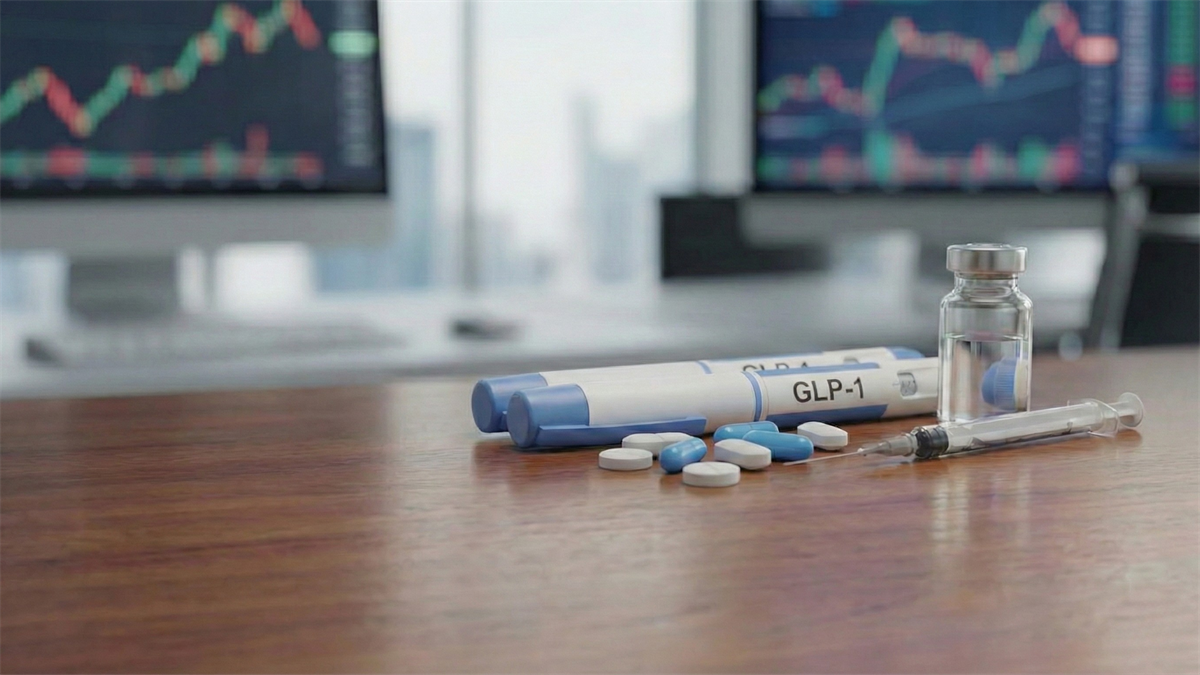
Article Highlights
- With the FDA approval of GLP-1 agonists in pill form, the healthcare industry is looking to build on last year's momentum.
- Grand View Research forecasts the GLP-1 drug market to grow by a CAGR of nearly 19% through 2030.
- The Roundhill GLP-1 & Weight Loss ETF, which has gained 52% over the past year, provides a basket of leading companies involved in the manufacturing and sales of weight-loss drugs.
After a lackluster first half of 2025, healthcare stocks staged a comeback, posting the best performance among the 11 S&P 500 sectors over the past six months.
In large part, that rebound was fueled by increasing demand for weight-loss drugs such as GLP-1 agonists and semaglutide treatments, including Ozempic, Wegovy, Zepbound, and Mounjaro.
While the popularity of those injectable treatments reached a fever pitch in 2025, the recently FDA-approved pill form of weight-loss drugs could be an even bigger catalyst in 2026.
For investors looking to gain exposure, any number of Big Pharma companies operating in that space could provide a boost to your portfolios in the year ahead. But one exchange-traded fund (ETF)—the Roundhill GLP-1 & Weight Loss ETF (NASDAQ: OZEM)—provides a one-stop shop, holding a basket of leading companies involved in the manufacturing and sale of weight-loss drugs.
Ticker Revealed: Pre-IPO Access to "Next Elon Musk" Company (Ad)
We’ve found The Next Elon Musk… and what we believe to be the next Tesla.
It’s already racked up $26 billion in government contracts.
Peter Thiel just bet $1 Billion on it.
👉 Unlock the ticker now and get it completely free.
America’s Weight-Loss Fixation Is Driving Massive Growth
Industry consultancy firm Grand View Research forecasts the GLP-1 drug market to grow by a compound annual growth rate of 18.54% between 2024 and 2030, resulting in a global market value increase from $13.84 to $48.84 billion.
Meanwhile, North America has dominated the GLP-1 agonists weight-loss drug market, accounting for nearly 76% of overall revenue.
That growth has already been enjoyed by shareholders of the companies dominating that space, including Novo Nordisk (NYSE: NVO), maker of Ozempic and Wegovy, and Eli Lilly (NYSE: LLY), maker of Zepound and Mounjaro.
And while not as prominent in the weight-loss space, Pfizer (NYSE: PFE) has recently doubled down on its efforts in that industry, signing a $2.1 billion licensing agreement in December 2025 with a Chinese pharmaceutical company to develop its early-stage weight-loss pill.
Those pills, like their injectable counterparts, will serve as a major catalyst for the industry's future. In the company’s Q3 earnings call last fall, Dan Skovronsky, Eli Lilly’s chief scientific and medical officer and president of Lilly Immunology, emphasized the important role that those pills will play going forward.
Specifically, Skovronsky noted a “goal to deliver efficacy similar to injectable GLP-1 monotherapy in an easy-to-use daily pill.”
Skovronsky added that “we expect results from up to six phase III studies by the end of 2026,” and “expect retatrutide can deliver deeper and more rapid weight-loss than existing obesity medicines, even more than tirzepatide,” the prescription drug sold under brand names such as Mounjaro and Zepbound.
That is likely to fuel ongoing top-line growth for those major drugmakers, which has already resulted in 46 million new customers for Novo Nordisk, according to CEO Mike Doustdar, including “around 3 million more people with our GLP-1 treatment compared to just 12 months ago.”
The All-in-One ETF for Weight-Loss Market Exposure
The Roundhill GLP-1 & Weight Loss ETF provides exposure to the major players in the GLP-1 and semaglutide markets. The thematic fund gained nearly 52% over the past year, including a nearly 75% gain since its one-year low on April 8, 2025.
Much of that growth can be attributed to the recent performances of the aforementioned three Big Pharma companies—Novo Nordisk, Eli Lilly, and Pfizer—which together account for almost 40% of the ETF’s total weighting, with NVO and LLY receiving the two largest allocations overall.
OZEM’s fourth-largest holding, with a 4.41% weighting, Viking Therapeutics (NASDAQ: VKTX), currently has its dual GLP-1/GIP agonist, VK2735, in advanced clinical trials for obesity and metabolic disorders. The drug is available in both injectable and oral forms.
Additionally, Amgen (NASDAQ: AMGN)—the ETF’s ninth-largest holding with a 3.58% weighting—is developing its weight-loss drug, MariTide, which differs from daily or weekly treatments by aiming for monthly or quarterly dosing. That drug is currently in late-stage Phase 3 clinical trials for obesity treatment.
Icing the cake, the Roundhill GLP-1 & Weight Loss ETF also holds AstraZeneca (NASDAQ: AZN) and Regeneron Pharmaceuticals (NASDAQ: REGN). The former is currently awaiting FDA approval for a handful of oral, daily GLP-1 agonists, while the latter is developing combination therapies that use their muscle-preserving antibodies, trevogrumab and garetosmab, alongside GLP-1 drugs like Wegovy and Ozempic, to improve fat loss while preserving muscle mass.
Buffett, Gates and Bezos Quietly Dumping Stocks—Here's Why (Ad)
Imagine a bull market so powerful, every single investor became a millionaire. Not by finding the next NVIDIA or Bitcoin, but by owning a simple index fund.
It sounds impossible. Yet it happened – just a short time ago. Now a legendary figure says: "Brace yourselves. It's about to happen here, in America. But fair warning – it could be the worst thing that ever happens to you."
This story has received little coverage in the press. But if history repeats, it could bump tens of millions of Americans into a 7-figure net worth practically overnight.
Click here for the full story.
What Wall Street Thinks About OZEM
The ETF, which carries a net expense ratio of 0.59%, receives an aggregate Moderate Buy rating. Average daily trading volume may be light, at just 34,525 shares, but institutional buyers have been more active than sellers over the past year, with $7.18 million in inflows versus just $271,390 in outflows.
Current short interest of 6.3%—or 89,526 of the fund’s 1.5 million shares outstanding—isn’t insignificant. But of the 13 consensus ratings of the companies in its portfolio, 11 assign the ETF a Buy or Moderate Buy rating, while just two assign it a Hold, and none rate it a Sell.
Featured Stories
- Intuitive Surgical Just Proved the Growth Engine Still Runs
- 5 Stocks Under $5 with Big Potential (From TradingTips)
- Johnson & Johnson Quietly Triggers a Trend Following Buy Signal
- BREAKING: 4,400 Starlink satellites repositioned - why now? (From Behind the Markets)
- Realty Income: The Monthly Paycheck Winner of 2026
- Ally Financial Pops on Q4 Earnings Beat and $2 Billion Buyback
- Netflix Stock Drops 35%+ After Q4 as WBD Deal Risk Rises
