
A Huge Shift Is Underway in America (From Stansberry Research)
Key Points
- The company's own analysis reveals a significant valuation disconnect from its peers, which appears untethered from its track record of capital efficiency.
- A unique six-passenger cabin configuration provides a decisive economic advantage for future airline operators, potentially doubling the profitability per aircraft.
- The imminent start of the piloted transition flight campaign represents a critical engineering proof point and a major near-term catalyst for the stock.
On Nov. 4, Vertical Aerospace (NYSE: EVTL) delivered a third-quarter 2025 business update that created a fascinating paradox for investors. The company announced that it was on the cusp of its most significant technical milestone to date: the start of its piloted transition flight test campaign. This is the final and most critical phase and promises to be a game-changer for the company's VX4 aircraft.
Yet, the stock traded down on the news. This reaction was widely attributed to the company's forward-looking guidance on cash outflows, signaling that the market's focus has shifted squarely to the costs required to certify an electric aircraft.
This paradoxical reaction, however, creates an opportunity to look deeper.
While many investors focused on the spending necessary for development, Vertical's management team used the update to present its most powerful, data-driven case yet for why the company is fundamentally undervalued.
By revealing a stark valuation disconnect with its peers and highlighting a key, revenue-doubling competitive advantage, the company has laid out a compelling long-term investment case that appears to be getting lost in the short-term noise surrounding cash burn.
AI Software Is Creating the Next Billion-Dollar Giants - RAD Intel Is One of Them (Ad)
Just like Microsoft and Adobe rode the software wave in Web 1.0, RAD Intel is riding the AI software wave in 2025. Their product helps brands instantly find the right audience and message using AI – solving the #1 waste in marketing: misfired ad spend.
Already trusted by a who's-who of Fortune 1000 brands and leading global agencies – with recurring seven-figure partnerships in place. With a Nasdaq ticker reserved, $RADI, it's early – but very real.
$0.81 won't last – deadline Nov 20
The Valuation Gap That Defies Logic
On page 18 of its earnings presentation, Vertical presented its own blunt analysis for investors under the heading "Unwarranted Valuation Gap - Untethered from Fundamentals." The slide highlighted the company's market capitalization of approximately $400 million at the time, in stark contrast to the multi-billion-dollar valuations of its key competitors. But the argument goes beyond just the top-line number. The company presents a data-driven case that it is meeting or exceeding its peers in the aerospace sector on a range of key development and design metrics. Yet, it has not received the corresponding market valuation.
For investors, this self-assessment provides a clear checklist of fundamental advantages that may not be reflected in Vertical Aviation’s current stock price:
- Six-Passenger Seat Option: A key feature for operator profitability that sets its aircraft apart in the commercial market.
- 70 lbs of Luggage per Passenger: A practical advantage for real-world commercial use cases like airport shuttles, demonstrating a focus on customer needs.
- Capital-Efficient Hybrid Program: The ability to adapt its current airframe for a long-range hybrid model offers a low-cost path to entering lucrative new markets, such as defense and cargo.
- Superior Certification Path: A commitment to the highest global safety standard is expected to enable broader and faster global market access, creating a potential certification moat for Vertical.
- Dramatically Lower Cash Spend: To date, Vertical has spent substantially less capital (around $400 million) to reach a comparable or more advanced stage of development than its peers, who have spent upwards of $1.5 billion. This demonstrates a clear track record of capital efficiency.
VX4's 6-Seat Advantage Could Double Operator Profit
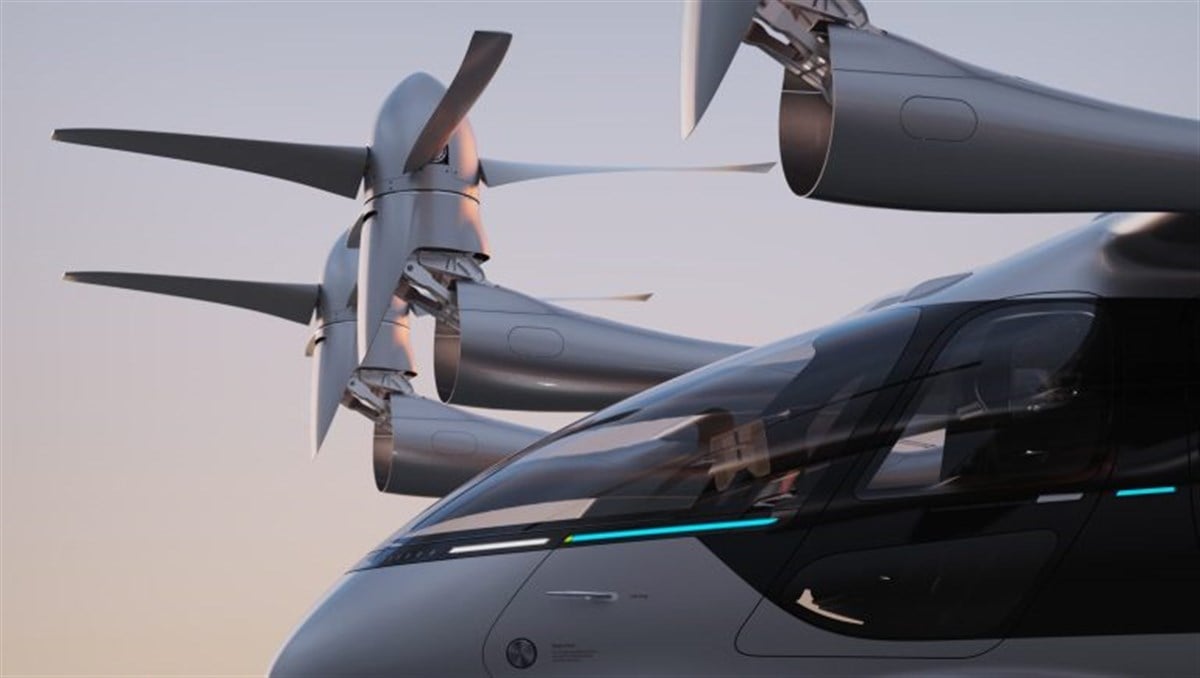
Perhaps the most powerful reason why the valuation gap may be unjustified lies in the superior revenue-generating capability of Vertical's VX4 aircraft. The company's third-quarter update revealed the first images of its certification aircraft design, confirming a unique six-passenger configuration. While a seemingly simple design choice, the commercial implications are profound, creating a "two-for-one" economic advantage for future operators.
For an airline or charter service to fly six passengers, they would need to purchase, staff, and operate two aircraft from key competitors, versus just one VX4. This has a dramatic and direct impact on the profitability of each aircraft in an operator's fleet.
Vertical's own projections, based on a typical 40-mile mission, show that the six-passenger configuration can enable a 50% increase in revenue and a 123% increase in gross annual operating profit per aircraft compared to a four-passenger model. For commercial customers like American Airlines (NASDAQ: AAL) or Bristow (NYSE: VTOL), whose business models are built on maximizing revenue per flight, this is a decisive competitive advantage. This superior unit economics underpins the aircraft's long-term value and represents a powerful sales argument that the market may be underappreciating.
A month before the crash (Ad)
Amazon's Layoffs Were Just the Beginning
Amazon just slashed 30,000 jobs – the largest layoff in its history – and almost no one's talking about the real reason why. A former hedge fund manager says it's part of a much bigger shift. One that could reshape how we all work, invest, and build wealth in the years ahead. He's spent the last decade preparing for this moment... and just released something that could help everyday Americans get ahead, while there's still time.
The Price of Progress and the Path to a Re-Rating
The market's primary concern, cash burn, is directly linked to the company's next major catalyst. The projected $235 million in net cash outflows for the next 12 months is the necessary and transparent investment required to fund the imminent piloted transition flight and the ongoing development of the certification-ready aircraft.
This final 2025 flight phase, which the company has described as a “Weeks, Not Months” campaign, is the key de-risking event that will provide the definitive engineering proof point for the VX4 platform. A successful transition would validate the aircraft's core design and technology, potentially forcing the market to shift its focus from the cost of development to the value of the achievement.
For investors, the current situation presents an apparent disconnect.
The market is focused on the near-term spending.
At the same time, the company has laid out a clear, data-driven case based on a significant valuation gap and superior, revenue-doubling economics.
This is further supported by recent market data, which shows a 19.4% decrease in short interest as of mid-October, suggesting that bearish sentiment may be waning.
With a consensus 12-month analyst price target of $10.43, Wall Street sees significant upside potential from the current stock price.
The transition flight test could be the turning point that shifts market attention back to the fundamentals—and investors who position early could benefit from the upside.
Featured Articles:
- Follow the Money: 3 Stocks With High Institutional Ownership
- The altcoin intelligence that costs millions (yours free) (From Crypto 101 Media)
- Can Gold Mining Stocks Shine as the Metals Rally Falters?
- Last Call: Get In Before RAD Intel Surges (From RAD Intel)
- Dutch Bros Beats Earnings for 11th Consecutive Quarter
- From Dividends to Growth: Why These 3 Stocks Stand Out in 2025
- AMD’s Price Pullback Equals Opportunity: The Big Gains Are Coming
